Enough about me. This is for [y]ou.
More on Me Here
e-mail me

What should i Link to?
Archives
Three Questions for Worship Narrative Theology-- Trinitarian Spirituality--Missiological Vision. This is how we are thinking about worship. Three basic questions: What are we remembering? How are we entering into and experiencing the Presence of God? How are we engaging the World? For me, if we aren't remembering the Story in worship-- not our derivative notions of God extracted from the Story but the actual texture of the narrative itself then it's not Christian. If we aren't experiencing God as Trinity-- active, experiential participation in the Father's relationship with the Son through the power of the Spirit, it's not Christian. If we aren't actively engaging the World-- voicing the cries of the voiceless, interceding for the whole Creation, and so forth, it's not Christian worship.
There are many ways to "experience" God short of Christian, which is the only true eternal life. My growing assessment of much so-called Christian worship in the North American context is rooted in philosophical constructs about God rather than actual remembrance of the Story; in a largely unitarian scope of spirituality and is missionally bankrupt-- an affirmation of the status quo. It is really scary how close real idolatry is to true worship. They are so close together that we scarcely recognize the difference. The truth about idolatry is that most of the time we don't actually know we are mixed up in it. I am convinced that noone sets out to knowingly worship an idol. The worship of idols comes from our pervasive quest for security. We recreate God into an apparition of that which we think will give us security and we call that God and proceed to worship that. One of our seminary students recently wrote a poem that gets at something of this idea. You can see the work on our seminary poetry blog
Idolatry is what enables us to go to worship and say things like, "It's not about me. It's all about you God," and yet in the most stunning ways make the worship completely referenced around ourselves. More on the fallacy of the statement "It's not about me. It's all about you," later.
So try asking these questions about corporate worship experiences-- but it's critical you ask them without a critical spirit. Invite the Holy Spirit to birth in you a way of appreciative inquiry so that you might identify the work of God and be both affirming and encouraging rather than critical, condemning, judgmental and accusatory. posted by John David Walt | at 10/31/2005 10:40:00 PM | 3 comments


Tuesday, October 25, 2005
Living Reminders I've been reading and re-reading Henri Nouwen's lectures outlining-- no casting vision-- for a pastoral theology compiled in the short book, The Living Reminder. Nouwen truly saw and lived into the vision. Here's a sample of what is simultaneously challenging and encouraging me:
One way to express this is to say that in order to be a living reminder of the Lord, we must walk in his presence as Abraham did. To walk in the presence of the Lord means to move forward in life in such a way that all our desires, thoughts, and actions are constantly guided by him. When we walk in the Lord's presence, everything we see, hear, touch, or taste reminds us of him. This is what is meant by a prayerful life. It is not a life in which we say many prayers, but a life in which nothing, absolutely nothing, is done, said, or understood independently of him who is the origin and purpose of our existence. This is powerfully expressed by the nineteenth-century Russian Orthodox staretz, Theophan the Recluse:
Into every duty a God-fearing heart must be put, a heart constantly permeated by the thought of God; and this will be the door through which the soul will enter into active life. . . . The essence is to be established in the remembrance of God, and to walk in his presence. (p.28)
This is congruent with the edge of my developing ideas of discipleship. For me it comes down to three primary realities: a narrative theology, trinitarian spirituality and missional trajectory.
Labels: practicing the story
posted by John David Walt | at 10/25/2005 09:05:00 PM | 2 comments
Monday, October 24, 2005
new poem I've been working on a poem for a couple of years whose time has come to release. find it here.
I wrestled with titles for the poem--- Creation Healed OR Perfect Week OR Shalom Zone. Anyhow-- you'll get the point. It's a bit of a "spoken word" poem so won't have the same effect if you are reading as if you were hearing it in my best M & M voice. ;-)
are any of you people out there into poetry? all the poets in the house say ye-ah.
tune in tomorrow when I will try and share some of my interactions with Henri Nouwen (not actually Henri bc/ he's dead, but one of his early lesser known books entitled "The Living Reminder). Later in the week I want to steer you to a friend's new blog dedicated almost exclusively to Fletch quotes. its a winner. bfn. (that's short for "bye for now." posted by John David Walt | at 10/24/2005 11:19:00 PM | 1 comments
Tuesday, October 18, 2005
Creation Healed: between seasons There lives a day near fall when summer's done
a first true gazing at green
before retirement yet after the race
when leaves cease clinging
begin cleaving
derivative shade trellises
glory's ironic bloom
momentary fleeting
between stress and strain
twixt success and surrender
career and cancer
This day defies life and death, yet
defines them.
Labels: poetry
posted by John David Walt | at 10/18/2005 08:54:00 AM | 1 comments
Sunday, October 16, 2005
Shabbat Shalom OR All in a day's rest


 posted by John David Walt | at 10/16/2005 08:26:00 PM
| 2 comments
posted by John David Walt | at 10/16/2005 08:26:00 PM
| 2 comments
Friday, October 14, 2005
ON Morning and Evening Prayer
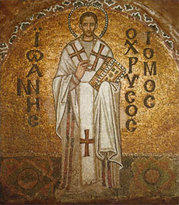
My friend, Ben Witherington, and one of my New Testament teachers, shares this today on his insightful blog
"For the psalmist says,'When I remembered you upon my bed, I thought upon
you in the morning dawn.' We ought then to have God always in remembrance
but then especially when thought is undisturbed and when by means of that
remembrance one is able to concern himself, when one can retain things in
memory. For in the daytime, indeed if we do remember, other cares and
troubles, entering in, drive the thought out again; but in the night it is
possible to remember continually, when the soul is calm and at rest; when it
is in the harbor and under a serene sky. ...For it were indeed right to
retain this remembrance through the day also. But inasmuch as you are always
full of cares and distracted amidst the things of this life, at least then
remember God on your bed. At the morning dawn mediatate on God. If at the
morning dawn we meditate on these things, we will go forth to our business
with much security. If we have first made God propitious by prayer and
supplication, going forth in this fashion we shall have no enemy. Or if you
should, you will laugh him to scorn, having God propitious. There is war in
the marketplace; the affairs of every day are a fight, they are a tempest
and a storm. We therefore need arms, and prayer is a great weapon. We need
favorable winds; we need to learn everything, so as to go through the length
of the day without shipwrecks and without wounds. For every single day the
rocks are many, and oftentimes the boat strikes rock and is sunk. Therefore,
we have especial need of prayer early and by night." (Homily on Hebrews
14.9).
Ben offers this from John Chrysostom (347-407). I am struck by the idea of going forth into a day with "no enemy." Reflect more on these words: "There is war in the marketplace; the affairs of every day are a fight, they are a tempest and a storm. We therefore need arms, and prayer is a great weapon. We need favorable winds; we need to learn everything, so as to go through the length of the day without shipwrecks and without wounds." This is the most interesting and compelling account of morning and evening prayer I have ever seen.
There are two more compelling readings on prayer in his post you can read by looking here.
THANKS BEN.
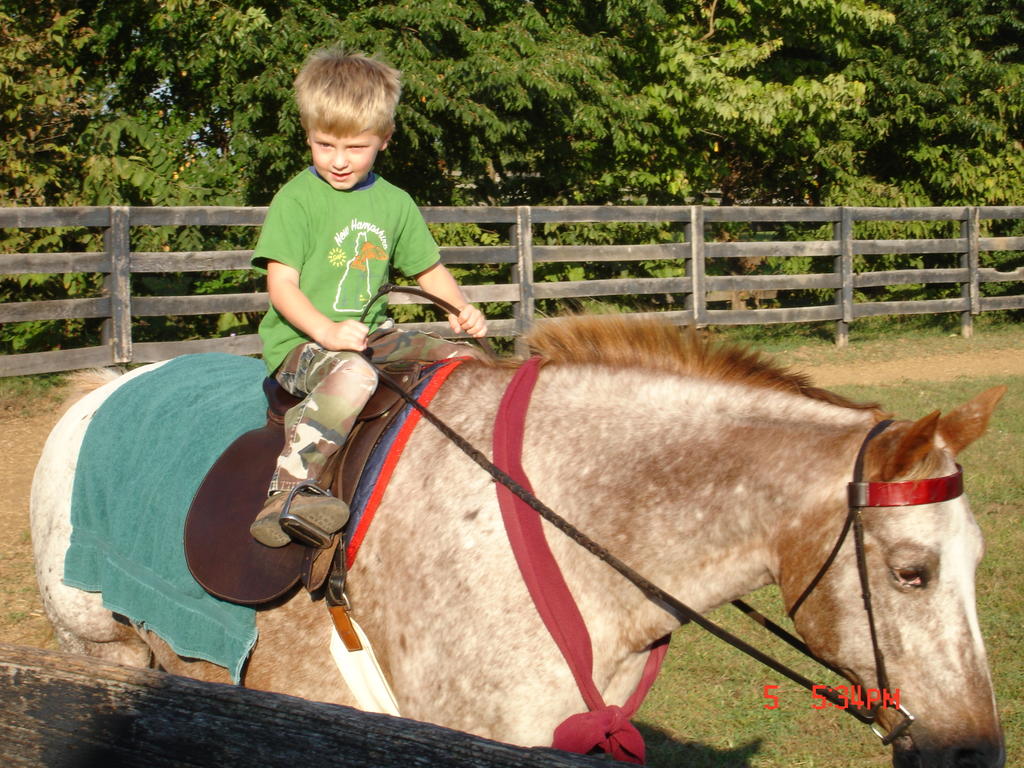 THIS ONE IS OF DAVID (5) AT HIS HORSEBACK RIDING LESSON.
posted by John David Walt | at 10/14/2005 10:30:00 AM
| 0 comments
THIS ONE IS OF DAVID (5) AT HIS HORSEBACK RIDING LESSON.
posted by John David Walt | at 10/14/2005 10:30:00 AM
| 0 comments
Monday, October 10, 2005
The nature of a worship leader We were in North Carolina last week with friends. On the last night of our stay they took us to a very nice restaurant-- 5 stars. I have never had service like we had at this restaurant. We had an extraordinary waiter for the multiple course affair. He began by playing the role of host, giving us a brief tour of the place and sharing the colorful history of the 150 year old home serving as our dining room. Next he gave us a tour of the menu, highlighting our options and answering all our questions. Then he gave us a brief review of how the evening would go, complete with courses, intermezzos and the preliminary tastings we would be treated to. He told us enough about the chef to give us a feel that we knew her a bit and he virtually coached us through our orders. When someone left the table for the restroom, he quietly took their napkin and replaced it with a new one. I never once ran out of tea or lemons or butter nor did it occur to me that I was about to run out. The amazing thing is that I was never aware that he had actually filled my glass or given me additional condiments. He "waited" on us in an extraordinary way. It was as though he was part of our group and yet completely unnoticed. He cared for our needs with exquisite detail. This guy was totally focused on us rather than on performing well at his job. It was as though he had transcended his job and become dynamically alive in service.
Through it all I remembered that the new testament word for minister is "deacon" which means "one who waits tables." As I have continued to reflect on this connection it has made me ponder this question: What would it look like for a worship leader to take on this spirit of a deacon, a waiter, in the craft of worship leadership? It's interesting. . . . at the center of Christian worship is a Table.
Sitting in Chapel the other day I was struck at the way our worship design team had ordered the worship space. In the center of the aisle at the head of the sanctuary, turned long-ways, the communion table functioned as though it were the helm of a ship. The cross served as the mast and the bread and wine were stowed under cloths as precious cargo. I remember thinking it was a kind of mercy ship. At the center of that worship, we were waiting on each [o]ther at the table.
I found myself thinking, what would it look like if I saw myself in this gathering as a waiter. What would it look like if our design team envisioned themselves and their work as a wait staff. Often it looks that way back stage prior to a worship service, a hustling wait staff. But what if our focus were more on waiting on people than on getting the details of a program right or on pulling off a polished worship experience. That strikes me as the essence of worship leadership and the nature of a worship leader.
This is a picture of our fabulous worship design team-- the group I am privileged to work with daily at the seminary-- the true joy of my job.
 posted by John David Walt | at 10/10/2005 09:03:00 PM
| 8 comments
posted by John David Walt | at 10/10/2005 09:03:00 PM
| 8 comments
Sunday, October 09, 2005
It's beginning to look a lot like . . . . . .

Now for the really important countdown. . . . . .
T- 22 days and counting.
Thanks MeMe for the Great Pumpkin Blow Up Yard Art. They love it! posted by John David Walt | at 10/09/2005 08:03:00 PM | 1 comments
Saturday, October 08, 2005
Higher Math T - 24 days until House Due

T - 50 days until Baby Due
click on the image to see more pictures.
posted by John David Walt | at 10/08/2005 09:51:00 PM | 0 comments
An [o]ther(s) Orientation The short paragraph below comes from the May-June 2005 issue of Weavings: A Journal of the Christian Spiritual Life. I try to read this one regularly. I came across the quote while cleaning off my desk for the first time since May-June 2005. The article, "Becoming the Bride: Belonging to a Community of Two" was authored by Jan Richardson. I've been doing a lot of thinking about the metaphor of marriage for the entire Christian life. Though this one was written about man-woman marriage, read it in the light of the larger metaphor.
"I have come to appreciate relationship as an ascetic practice. Our word "ascetic" comes from the Greek askein, which means to exercise or to work. Forms of ascetism are infinite, and for many the word tends to stir images of the more extreme exercises that we sometimes associate with earlier Christians: severe fasting, self-flagellation, hair shirts. Fundamentally, however, asceticism encompasses practices that take us outside our familiar terrain in order to draw us more deeply into God, and into whom God has created us to be: not for ourselves alone, but for the life of the world. Ascetic practice enables us to examine familiar habits, to question our accustomed ways of being and responding, and to stretch--to exercise ourselves, to develop muscles that enable us to move as the Spirit beckons us. This kind of practice challenges and prepares us to be mindful about the deaths to which God calls us and not simply let them capture us unawares. It trains our eyes to find the wellsprings in the landscape, to spot the manna that waits for us when the way is most difficult."
These words have particular significance with respect to being "OTHERS ORIENTED" in light of the comment string from friends in the prior post.
 Mary Kathryn (3) at her "ballerina" lessons.
Labels: marriage
posted by John David Walt | at 10/08/2005 05:06:00 PM | 1 comments
Wednesday, October 05, 2005
the american hermaneutic Dan Lowe sent me the piece below excerpted from September 12 New Yorker magazine.
In the closing 6 paragraphs, the article gets especially interesting. Gladwell reports that the unbelievable success of "the purpose driven life" caused Rick to do some "soul-searching."
Rick continues...
"God led me to Psalm 72, which is Solomon's prayer for more influence. it sounds pretty selfish. Solomon is already the wisest and wealthiest man in the world. He's the king of Israel at the apex of its glory. And in that psalm he says, 'God, I want you to make me more powerful and influential.' It looks selfish until he says, 'So that the King may support the widow and orphan, care for the poor, defend the defenseless, speak up for the immigrant, the foreigner, be a friend to those in prison.' Out of that Psalm, God said to me that the purpose of influence is to speak up for those who have no influence. That changed my life. I had to Repent. I said, I'm sorry, widows and orphans have not been on my radar.....I started reading through scripture. I said, How did i miss the two thousand verses on the poor into he Bible? So i said, I will use whatever affluence and influence that you give me to help those who are marginalized."
"widows and orphans have not been on my radar" ???? it's the american hermaneutic isn't it? takes me back to my thoughts about Jesus vs. Satan in the wilderness temptation narratives. The real battle ground is for how one reads the Bible. any thoughts? posted by John David Walt | at 10/05/2005 06:55:00 PM | 8 comments


Today...